

Last Updated: October 31, 2026
Quick Summary
Lift chairs help older adults with back pain by reducing the strain of sitting down and standing up. Their motorised mechanism tilts the seat forward to help the user rise, and reclines to a supported position for rest. A lift chair is not a treatment for back pain, so anyone with severe or new pain should consult a doctor first.
- Pushing off a standard armchair loads the lower back and hips, which a lift mechanism shifts onto the chair.
- Adjustable lumbar support fills the gap between the lower back and the seat, keeping the spine supported.
- Seat width should be 1 to 2 inches wider than the widest part of the hips.
- Seat height should let the feet rest flat with the knees at about 90 degrees.
- Choose a weight capacity at least 25 to 50 pounds above the user's body weight.
Table of Contents
- How Lift Chairs Help With Back Pain in Older Adults
- Lift Chair Features for Back Support
- Lift Chair Sizing Guide: How the Chair Should Fit Your Body
- Benefits of Power Lift Recliners for Daily Comfort and Independence
- Medicare Coverage for Lift Chairs and What to Check
- Safe Use and When to Ask Your Doctor First
- Frequently Asked Questions
How Lift Chairs Help With Back Pain in Older Adults
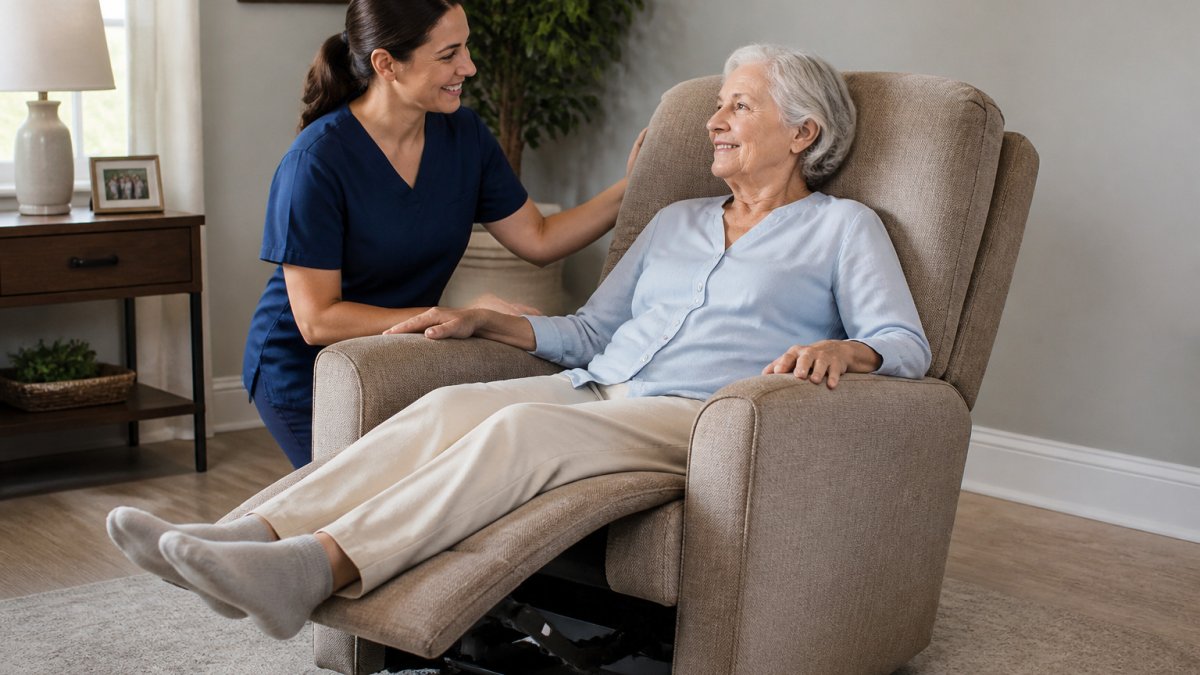
A lift chair is a recliner with a motorised mechanism that tilts the seat forward to help the user stand, and reclines it to a supported position for rest. Compare a lift chair with a standard recliner to see how the two differ in comfort and posture. For older adults with back pain, that makes sitting down and getting up noticeably less strenuous. At MEGA MOTION LIFT CHAIRS, our collection is built around that everyday problem, so this guide covers what to look for before you buy.
Most of the benefit comes from reducing the strain of repeated sit-to-stand movements.
Lift chairs are not a treatment for back pain, and they do not replace advice from a clinician. Readers with severe or new back pain should talk to a doctor before choosing one.
Lift Chair Features for Back Support
Back support depends on how the chair positions the spine and how well it adapts to the user's body. Several features determine whether a chair offers real support or just a soft seat.
Recline, Lumbar Support and Heat
Recline range matters because a chair that reclines fully can take pressure off the lower back. Many models offer infinite positioning, letting the user settle at the most comfortable angle.
The iNFI ELITE-MM-3900 includes three-zone heat covering the lower back, seat and chaise pad ottoman areas.
Motors, Headrests and Footrests
Motor count shapes how precisely the chair adjusts. Dual motors let the back and footrest move independently, as on the iNFI ELITE-MM-3730.
The iNFI ELITE models include a power-tilt headrest and a standard glide-extension footrest, and feature chaise pad construction for head-to-toe comfort and support.
Lift Chair Sizing Guide: How the Chair Should Fit Your Body
Fit is the single most important factor in whether a lift chair helps or hurts a user with back pain. A chair that is too deep, too narrow, or too low strains the same joints it was meant to protect, and can make standing harder. Before measuring, read a buyer's guide on what actually matters when choosing a lift chair.
Step 1: Measure Seat Width
Have the user sit in a firm chair with feet flat on the floor. Measure the widest part of the hips and thighs while seated, add 1 to 2 inches for comfort and clothing, and compare that number to the chair's listed seat width.
Step 2: Measure Seat Depth
Measure from the back of the buttocks to the back of the knee (the popliteal crease) while seated. Seat depth should roughly match this measurement, or be 1 inch shorter. Too deep, and the edge presses into the backs of the knees, restricting circulation and forcing the user to slide forward, which rounds the lower back and increases strain.
Step 3: Measure Seat Height
Measure from the floor to the back of the knee while the user is seated with feet flat. Seat height should let the feet rest flat with the knees at roughly a 90-degree angle. Too low makes standing harder and loads the lower back; too high leaves the feet dangling, reducing stability.
Step 4: Check Total Recline Length and Wall Clearance
Measure from the wall behind the chair to where the fully reclined footrest will extend. Most lift chairs need 18 to 24 inches of clearance behind them, but this varies by model. If the chair will sit close to a wall, look for a wall-hugger or space-saver design.
Step 5: Confirm Weight Capacity with Margin
Choose a model whose weight capacity exceeds the user's body weight by at least 25 to 50 pounds. Heavy-duty models often have wider seats and stronger motors, so if the user is near the upper limit of a standard chair, compare seat dimensions and motor specifications together rather than relying on the weight rating alone. See which lift chairs are built for heavier users.
Quick Fit Checklist
Use this checklist before ordering:
- Seat width is 1-2 inches wider than the widest part of the hips
- Seat depth matches or is 1 inch shorter than the buttocks-to-knee measurement
- Seat height allows feet to rest flat on the floor with knees at about 90 degrees
How Poor Fit Affects Back Pain and Transfers
A poorly fitting chair can undermine the benefits of the lift mechanism. If the seat is too deep, the user may slide forward to relieve pressure behind the knees, flattening the lumbar curve and straining the lower back. If the seat is too low, the user must push harder to stand, even with lift assist.
When to Ask for Help
If the user has limited mobility or cannot sit comfortably for the measurements, ask a caregiver or occupational therapist to help. An occupational therapist can assess the home setup and recommend specific dimensions or features, a firmer seat, a higher seat height, or a power headrest, that match the user's needs.
The article's five-step fit check boils down to these measurements and what each one should match.
| Step | What to measure | Target |
|---|---|---|
| Seat width | Widest part of hips and thighs, seated | 1 to 2 inches wider than the hips |
| Seat depth | Back of buttocks to back of knee | Matches the measurement or 1 inch shorter |
| Seat height | Floor to back of knee, seated | Feet flat, knees about 90 degrees |
| Wall clearance | Space behind the chair for full recline | 18 to 24 inches, unless wall-hugger |
| Weight capacity | User's body weight | Chair rating exceeds it by 25 to 50 pounds |
Benefits of Power Lift Recliners for Daily Comfort and Independence
The most valued benefit of a power lift recliner is often independence.
Comfort features support longer, more restful sitting. Read how power lift recliners support daily comfort and independence. Side pockets keep remotes, magazines and glasses within reach, reducing how often a person leans or stretches.
Medicare Coverage for Lift Chairs and What to Check
Coverage rules can change and depend on the specific plan, so check the official source before assuming any part of the cost will be reimbursed. Find out whether a lift chair purchase may be tax deductible before you buy.
Before purchasing, ask the seller about the warranty. The iNFI ELITE models sold through MEGA MOTION LIFT CHAIRS, for example, list two years on parts and service with a limited lifetime warranty on the steel lift frame.
Safe Use and When to Ask Your Doctor First
A lift chair is a motorized piece of furniture, and safe use depends on proper setup, clear operating habits, and knowing when to seek professional advice. This section covers the everyday details that keep users safe and comfortable.
Placement and Setup
Place the chair on a firm, level floor. Carpet is fine, but deep pile or uneven flooring can make the chair wobble during lift and recline. Leave enough space behind the chair for the full recline range, typically 18 to 24 inches, unless the model is a wall-hugger.
Operating the Remote
Most lift chairs come with a wired or wireless hand control. Label the buttons clearly if the user has low vision or memory issues, some remotes have raised icons or color-coded buttons. Teach the user to press and hold the button until the chair reaches the desired position, then release, and never stand while the chair is still moving.
Power Outages and Battery Backup
The iNFI ELITE models include a lithium battery backup pack that keeps the recliner operational when the power goes out. Test it periodically per the manufacturer's instructions. If there is no backup, know how to manually lower the chair, most models have a manual release or emergency lowering procedure in the owner's manual.
Getting In and Out Safely
Before sitting, make sure the chair is fully upright and the footrest is retracted. Back up until the backs of the legs touch the seat, then reach back for the armrests and lower yourself slowly. To stand, use the lift function to raise the seat until the feet are flat and the knees are at a comfortable angle, then push up from the armrests.
When to Ask Your Doctor First
A lift chair can make daily life easier, but it is not a treatment for back pain. Speak with a doctor or physical therapist before buying if the user has:
- New or worsening back pain, especially with numbness, weakness, or tingling in the legs
- Recent spinal surgery or a fracture
- Severe arthritis or osteoporosis
A clinician can help distinguish musculoskeletal pain from other causes and advise whether a lift chair is appropriate. In some cases, a physical therapist or occupational therapist can recommend specific features, a firmer seat, adjustable lumbar support, or a power headrest, based on the user's condition.
Maintenance and Warranty Basics
Keep the chair clean and check the power cord and remote periodically for wear. Review warranty terms before purchase, including the limited lifetime warranty on the steel lift frame and the two-year warranty on parts and service listed for the iNFI ELITE models.
Frequently Asked Questions
Does Medicare cover lift recliners for the elderly?
Coverage decisions depend on the specific plan and circumstances, so confirm with your plan or provider before buying. Some people look into supplemental plans or other assistance programs, and a doctor's note describing medical need can help with any review. Ask for coverage details in writing before purchasing.
Can a lift chair help relieve back pain in older adults?
A lift chair does not treat the underlying cause of back pain, so it works best as part of a plan your doctor or physical therapist has approved.
How should a lift chair fit someone with back pain?
Check seat width, seat depth and seat-to-floor height against the person's body. The seat should be deep enough to support the thighs without pressing the back of the knees, and the footrest should reach a comfortable height when reclined. Measure the person's height and weight and compare them with the chair's listed capacity.
When should an older adult ask a doctor about back pain before using a lift chair?
Speak with a doctor before buying a lift chair if back pain is new, severe, or worsening, if it spreads into the legs with numbness or weakness, or if it follows a fall or injury. Ask a doctor also if you have heart, circulation or balance problems that affect how you should change positions. A healthcare provider can confirm whether a reclining, lifting chair suits your condition and how often to use it.
Medicare coverage and tax treatment vary, so verify both before you buy.
